
Elevate Your AppSec:
An In-Depth Look at the OWASP SAMM Framework
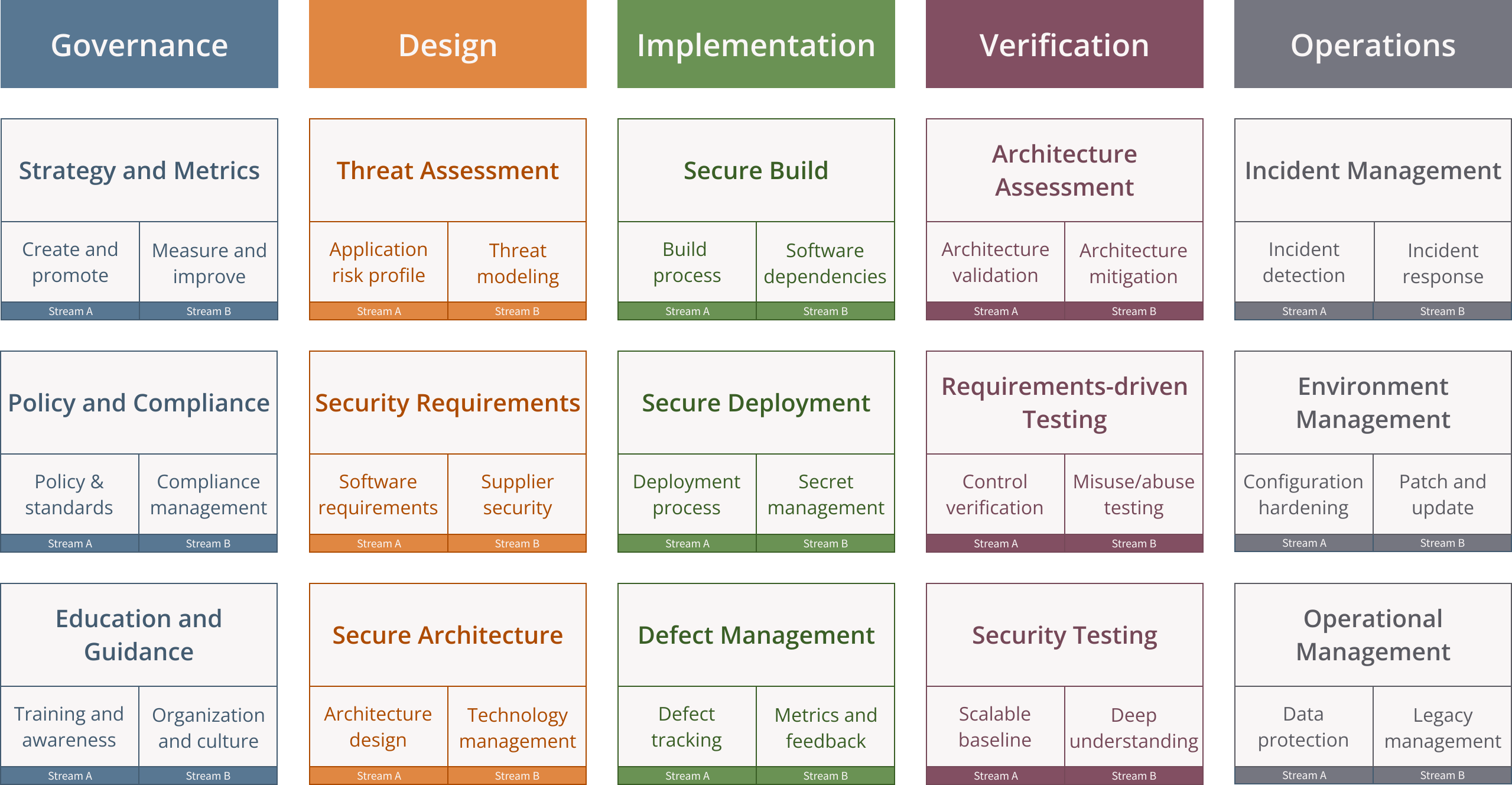
In today's software-driven world, security can no longer be an afterthought. It must be a foundational element woven into every stage of the development lifecycle. The OWASP Software Assurance Maturity Model (SAMM) provides a powerful, practical, and measurable framework for organizations of all sizes to analyze, define, and continuously improve their software security posture.
Whether you're starting from scratch or refining a mature security program, SAMM offers a roadmap that aligns security efforts with your business risks, helping you shift from reactive patching to proactive, predictable security.
What is OWASP SAMM?
OWASP SAMM is an open framework designed to help organizations assess, formulate, and implement a strategy for software assurance that integrates seamlessly into their existing Software Development Lifecycle (SDL).
The core mission is to provide an effective and measurable way for organizations to enhance their security maturity.
Key Characteristics of SAMM:
- Measurable: It defines distinct maturity levels across security practices, allowing for quantifiable progress.
- Actionable: It provides clear, step-by-step guidance and prescriptive advice for improving maturity.
- Versatile: It is agnostic to technology, process (e.g., Waterfall, Agile, DevOps), and organization size, making it highly adaptable.
- Risk-Driven: It encourages organizations to prioritize security activities based on their specific business risks and compliance needs.
The SAMM Structure: Business Functions, Practices, and Maturity
The SAMM model is structured to cover the entire software security ecosystem, broken down into hierarchical components:
The Five Business Functions
| Business Function | Focus Area |
|---|---|
| Governance | Establishing security leadership, strategy, and organizational policies. |
| Design | Integrating security requirements and architecture review into the planning phase. |
| Implementation | Ensuring secure coding, build processes, and defect management. |
| Verification | Testing and validating the security of the application and its artifacts. |
| Operations | Managing deployment, environment security, and incident response. |
Security Practices
Within each of the five Business Functions are three associated Security Practices, totaling 15 practices across the model. Each practice is an area of security focus, such as Threat Assessment (under Design) or Vulnerability Management (under Verification).
Maturity Levels (0 to 3)
The model's power lies in its Maturity Levels for each activity within a stream, providing a graduated, incremental path for improvement:
- Level 0: Initial/Minimal: The practice is unmet, or there are no structured activities. This is the starting baseline.
- Level 1: Ad-Hoc/Basic: Basic understanding of the practice; security activities are informal, reactive, and inconsistently applied.
- Level 2: Structured/Integrated: Security practices are defined, documented, and systematically integrated into standard processes, improving efficiency and effectiveness.
- Level 3: Optimized/Fully Functional: Practices are measured, optimized, and continuously improved, operating at a high level of sophistication and scale.
Implementing SAMM: A Six-Step Iterative Cycle
Adopting SAMM is not a one-time audit; it's a continuous, cyclical process of assessment, planning, and implementation.
1. Prepare
Define the scope of your SAMM effort (e.g., the entire enterprise, a specific business unit, or a critical application). Identify all key stakeholders and secure executive buy-in. Document the business context to ensure the process is repeatable in the future.
2. Assess
Conduct a thorough self-assessment of your current security practices against the SAMM criteria. This involves interviewing stakeholders, reviewing documentation, and examining existing security controls to determine your current maturity level (Level 0, 1, 2, or 3) for each activity stream.
3. Set the Target
Based on the assessment and your organization's risk profile, define a target maturity level for each security practice. You'll prioritize which practices offer the most significant risk reduction or business value for the next improvement cycle.
4. Define the Plan
Develop a concrete roadmap—typically consisting of several phases over a few quarters—to move from your current state to your target state. This involves breaking down the desired improvements into actionable tasks, allocating resources, and assigning owners.
5. Implement
Execute the roadmap by introducing the new security activities, tools, and processes. This is the stage of change management, where the security strategy is operationalized into the SDLC.
6. Roll-out & Re-Assess
Once the plan is implemented, integrate the new practices into the day-to-day operations and monitor their effectiveness. The cycle then restarts with a new assessment to measure the improvements, define new targets, and ensure continuous maturity.
Why Adopt OWASP SAMM?
SAMM is more than just another security checklist; it's a strategic tool for building a lasting, effective AppSec program.
- Make Security Measurable: By quantifying security maturity, you can track progress and demonstrate the value of your security investments to business leadership.
- Create a Tailored Roadmap: It helps you build a security program that is risk-aligned and perfectly suited to your specific organizational context, unlike one-size-fits-all compliance standards.
- Achieve Incremental Improvement: SAMM's maturity levels encourage a "crawl, walk, run" approach, making large-scale security initiatives feel manageable and achievable.
- Bridge the Gap: It provides a common vocabulary that helps security teams communicate the state of application security and the need for investment to management and development teams.
- Integrate Security: It ensures security is integrated into the entire software lifecycle, effectively shifting security left and reducing the cost of fixing vulnerabilities later in the process.
Ready to Build a Robust AppSec Program?
The OWASP SAMM framework is your strategic roadmap to sustainable software assurance. Don't leave your security to chance.
Contact Aytose Group today to schedule your comprehensive SAMM review and start building a measurable, risk-aligned security program that scales with your business.